BMI (Body Mass Index) is a simple numerical measure used worldwide to categorize body weight relative to height. It is one of the first tools doctors use to assess weight-related health risks — but it is also widely misunderstood and has important limitations worth knowing.
BMI (Body Mass Index) is a simple calculation that estimates body weight relative to height. It helps classify whether someone is underweight, normal weight, overweight, or obese and is commonly used by health professionals as an initial screening tool.
👉 Click the image to calculate your BMI instantly
What Is BMI?
BMI (Body Mass Index) is a value derived from a person's height and weight that provides a rough estimate of body fatness. It was developed by Belgian mathematician Adolphe Quetelet in the 19th century as a population-level measurement.
Today BMI is widely used because it is quick, free, and useful for identifying potential weight-related health risks across large populations.
How to Calculate BMI
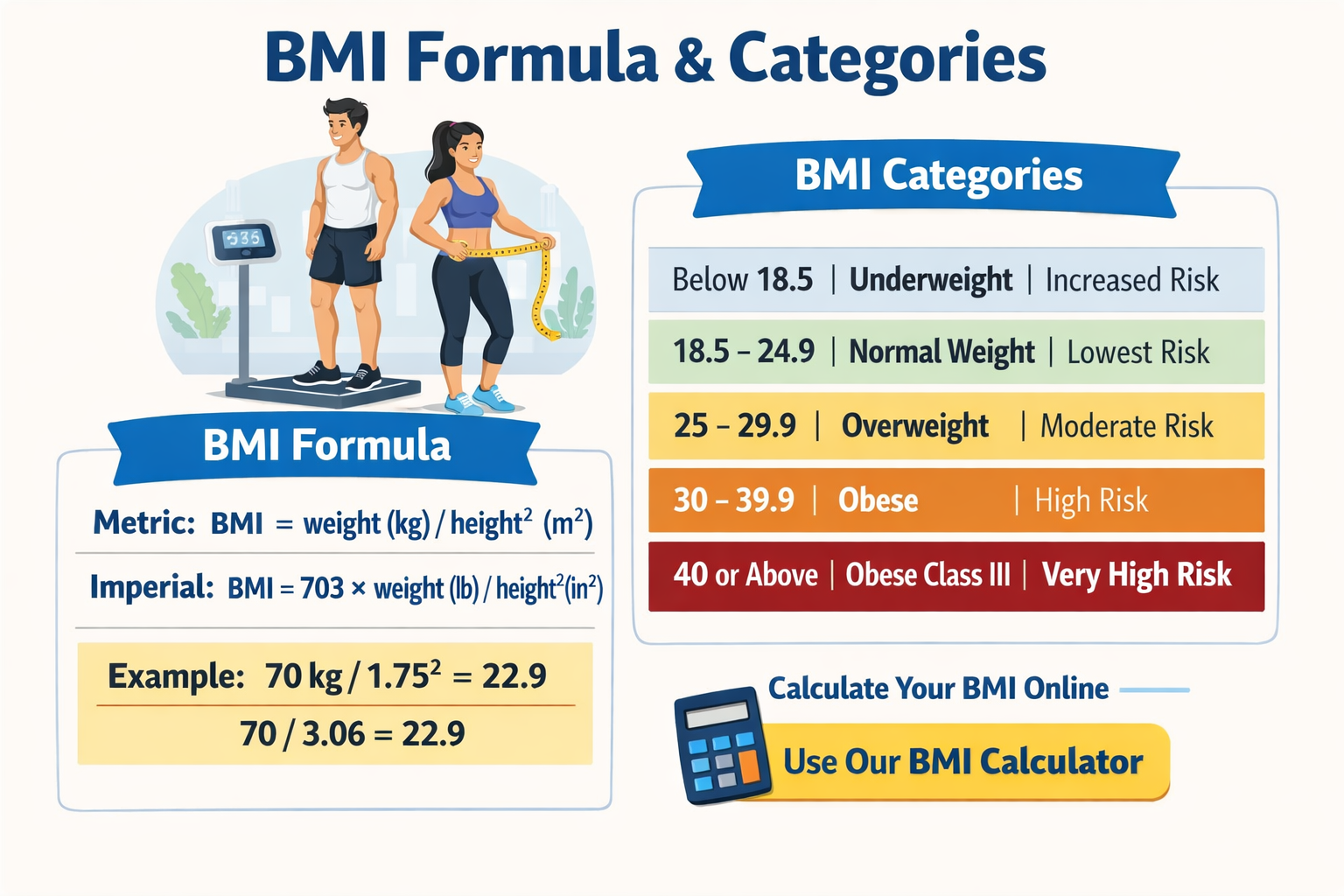
The BMI formula uses only two measurements: weight and height.
Imperial: BMI = 703 × weight (lb) / height² (in)
Example calculation:
→ Calculate your BMI instantly using our BMI Calculator
BMI Categories
| BMI Range | Category | Health Risk |
|---|---|---|
| Below 18.5 | Underweight | Increased risk |
| 18.5 – 24.9 | Normal weight | Lowest risk |
| 25 – 29.9 | Overweight | Moderate risk |
| 30+ | Obese | High risk |
Limitations of BMI
- Does not distinguish between muscle and fat
- Does not measure fat distribution
- Less accurate for athletes
- Different health risks across ethnic groups
Alternatives to BMI
- Waist circumference
- Body fat percentage
- Waist-to-height ratio
- DEXA body composition scans
→ Calculate body fat percentage
How to Maintain a Healthy BMI
- Maintain balanced calorie intake
- Exercise regularly
- Eat whole foods
- Sleep 7–9 hours
→ Calculate your daily calorie needs
Conclusion
BMI remains one of the easiest ways to estimate whether body weight falls within a healthy range. While it cannot measure body fat directly, it is still a useful starting point for assessing weight-related health risks.
For a more complete picture of health, BMI should be considered alongside other indicators such as body fat percentage, waist circumference, and overall lifestyle.